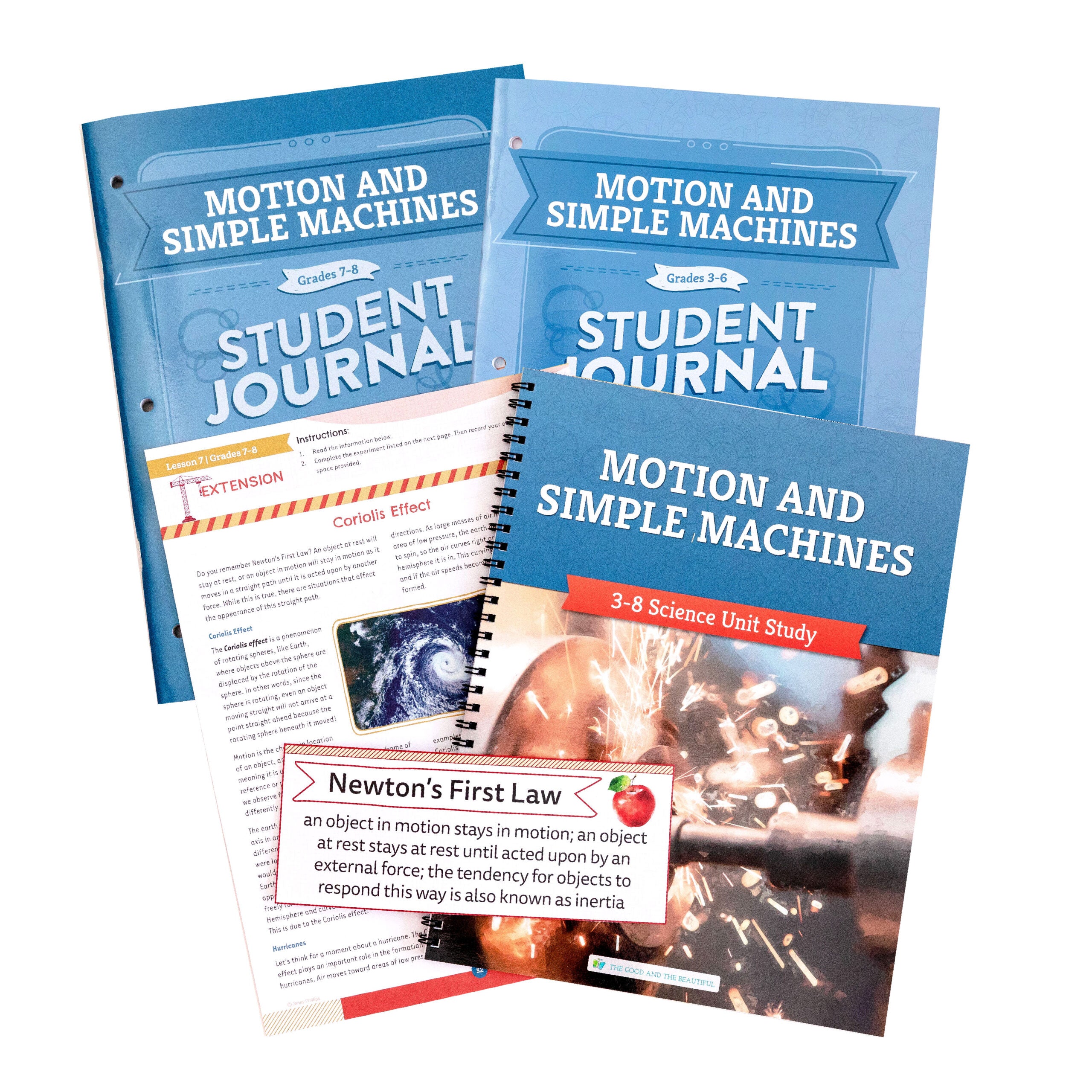
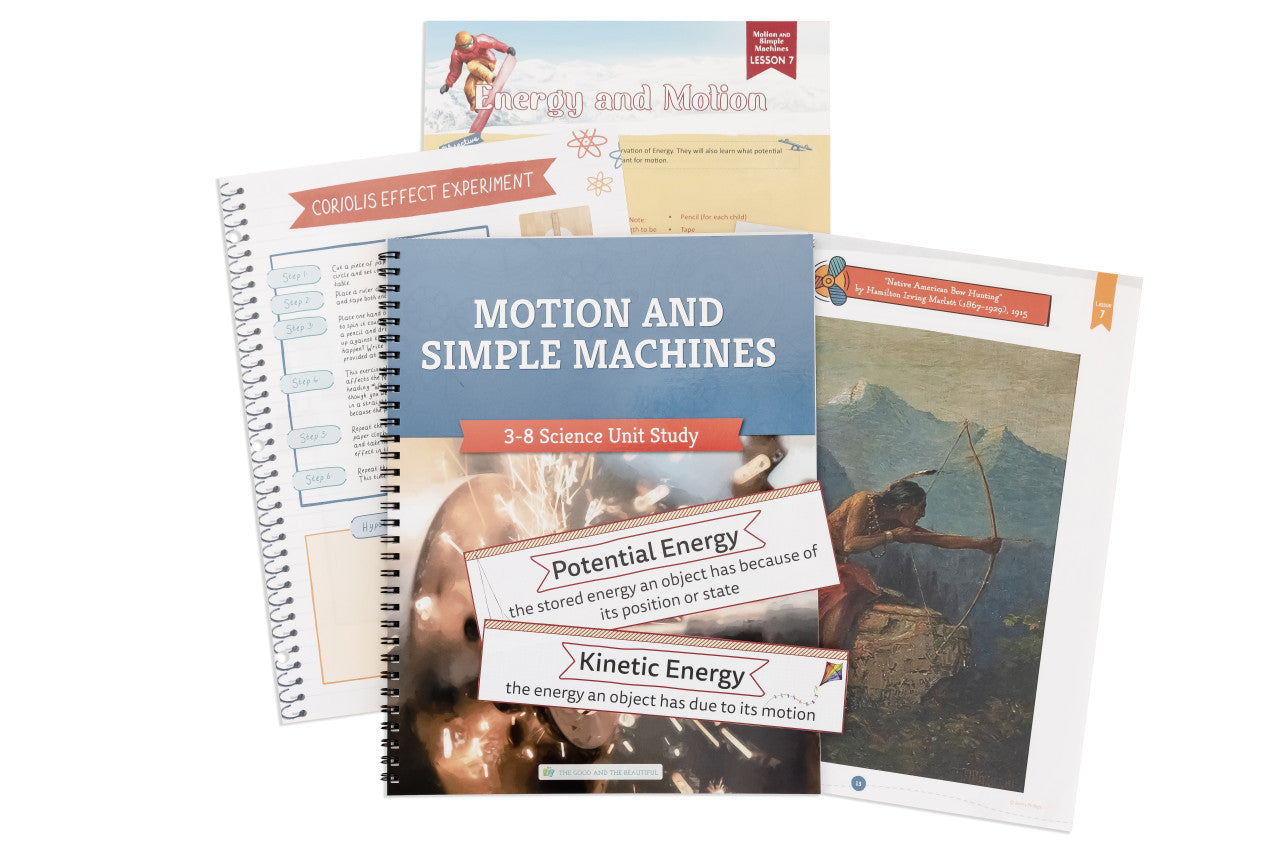
Motion and Simple Machines: 3-8 Science Unit Study
Basic Information
- Title: Motion and Simple Machines
- Subtitle: 3-8 Science Unit Study
- Subject: Physical Science/Engineering
- Grade Level: 3-8 (Ages 8-14)
- Type: Science Unit Study
- Series: The Good and the Beautiful Science Series
- Publisher: The Good and the Beautiful
Description
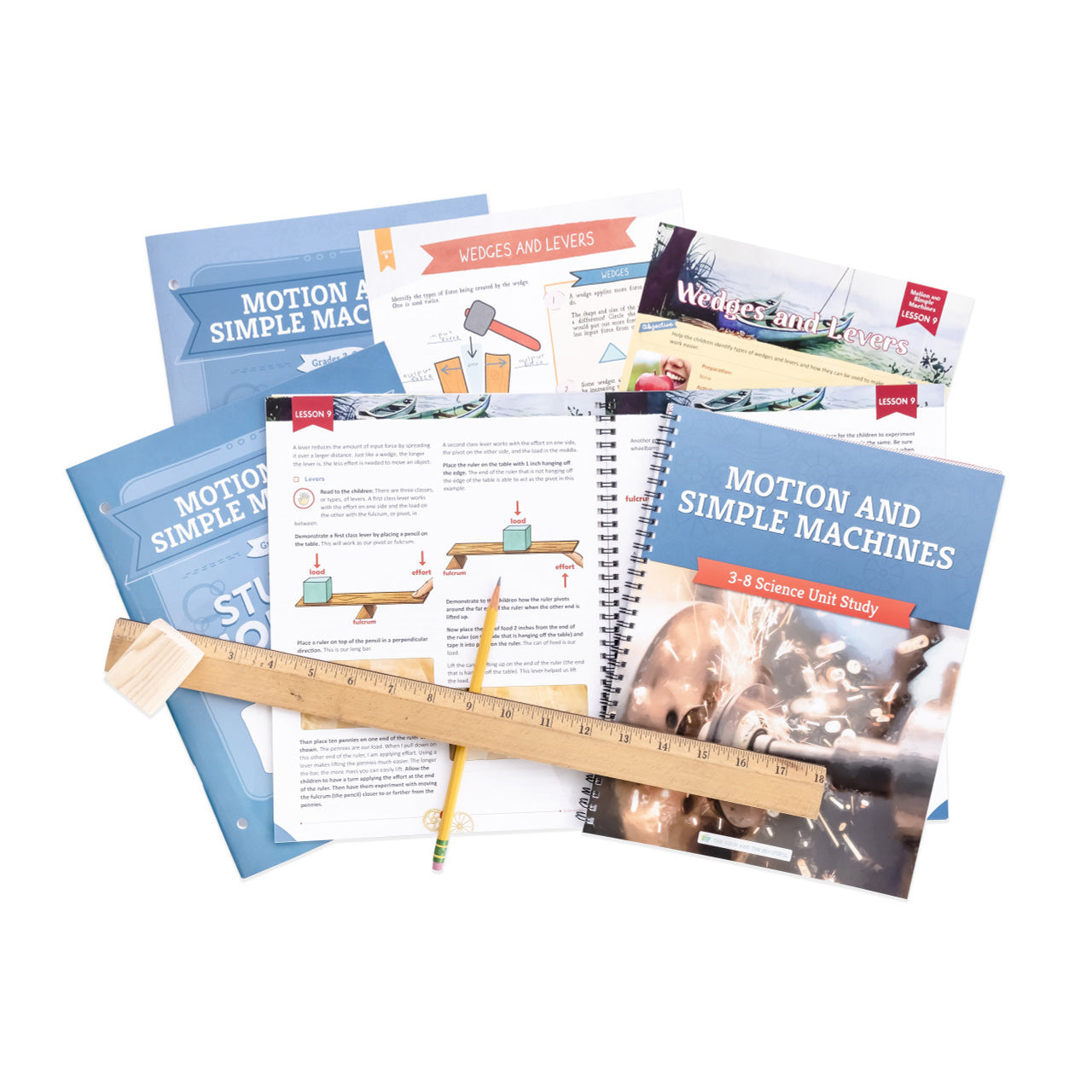
Motion and Simple Machines: 3-8 Science Unit Study is a comprehensive educational program that explores fundamental concepts of physics through the study of motion, forces, and simple machines. This hands-on unit study introduces students to engineering principles and mechanical concepts while encouraging practical application and problem-solving skills.
Content Areas
This comprehensive physical science unit covers:
- Motion Concepts: Speed, velocity, acceleration, and direction
- Forces: Push, pull, friction, gravity, and magnetic forces
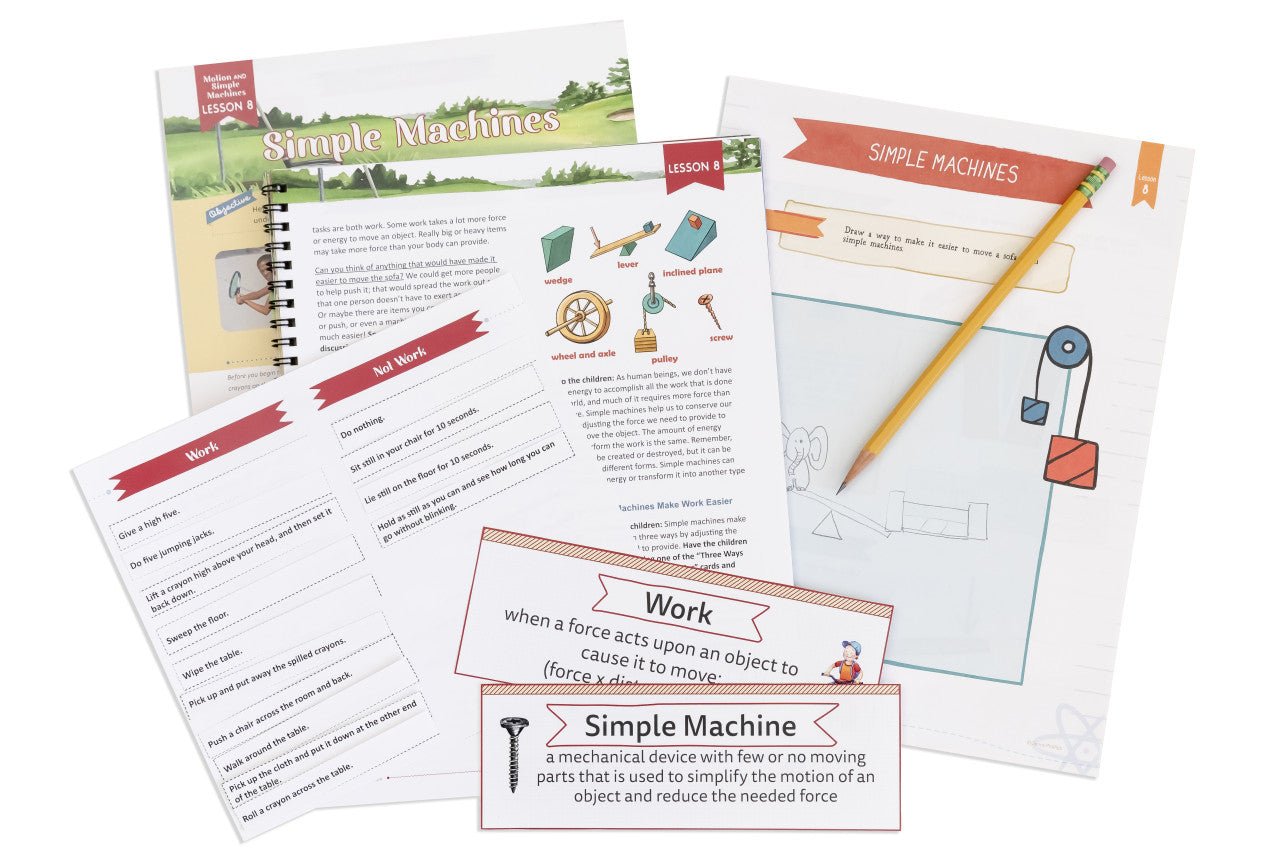
- Simple Machines: Lever, pulley, wheel and axle, inclined plane, wedge, and screw
- Energy: Kinetic energy, potential energy, and energy transfer
- Engineering Design: Problem-solving and design thinking
- Mechanical Advantage: How machines make work easier
- Real-World Applications: Machines in everyday life
- Scientific Method: Experimentation and observation
Educational Approach
- Format: Unit study with structured lessons and hands-on experiments
- Target Audience: Students in grades 3-8 (typically ages 8-14)
- Learning Style: Engineering-focused with practical construction and experimentation
- Assessment: Includes projects, machine construction, and scientific demonstrations
- Hands-On Learning: Building and testing simple machines
- STEM Integration: Science, Technology, Engineering, and Mathematics concepts
Course Structure
Unit Components
The curriculum comprises multiple physics and engineering topics:
- Motion Fundamentals: Basic concepts of movement and forces
- Simple Machine Types: Six classic simple machines and their functions
- Engineering Process: Design, build, test, and improve cycle
- Real-World Connections: Applications in technology and daily life
- Scientific Investigation: Hypothesis testing and data collection
Lesson Components
- Conceptual Learning: Understanding physics principles and concepts
- Hands-On Experiments: Building and testing simple machines
- Engineering Challenges: Design problems and solutions
- Data Collection: Measuring and analyzing machine performance
- Real-World Applications: Connecting concepts to everyday technology
Educational Benefits
Scientific Understanding
- Physics Literacy: Understanding fundamental concepts of motion and forces
- Engineering Principles: Basic understanding of mechanical systems
- Scientific Method: Experimentation and hypothesis testing skills
- Mathematical Application: Using math to solve physics problems
- Technology Appreciation: Understanding how machines improve life
Problem-Solving Skills
- Design Thinking: Systematic approach to solving engineering problems
- Critical Analysis: Evaluating machine efficiency and effectiveness
- Innovation: Creating solutions and improvements to existing designs
- Troubleshooting: Identifying and solving mechanical problems
- Persistence: Working through challenges and failures
Additional Materials and Resources
Included Materials
- Student Workbook: Comprehensive lessons and experiment instructions
- Blueprint Guides: Detailed plans for building simple machines
- Data Collection Sheets: Tools for recording experimental results
- Assessment Rubrics: Evaluation tools for projects and understanding
Required Supplies
- Construction Materials: Wood blocks, string, pulleys, wheels, screws
- Tools: Rulers, protractors, spring scales, timers
- Art Supplies: For designing and decorating machines
- Safety Equipment: Safety glasses, gloves for construction activities
Optional Enhancements
- Advanced Materials: Metal components for more sophisticated machines
- Measurement Tools: Digital scales, force meters, motion sensors
- Technology Integration: Computer simulations and modeling software
- Field Trips: Science museums, engineering facilities, or manufacturing plants
Course Structure Details
1. Introduction to Motion
Time: 2-3 weeks Content:
- Types of motion (linear, rotational, oscillating)
- Measuring motion (distance, time, speed)
- Forces that affect motion
- Newton's basic laws of motion
2. Forces and Energy
Time: 2-3 weeks Content:
- Types of forces (push, pull, friction, gravity)
- Energy forms (kinetic and potential)
- Energy transfer and conservation
- Force measurement and calculation
3. The Six Simple Machines
Time: 4-6 weeks Content:
- Lever: Fulcrum, effort, and load relationships
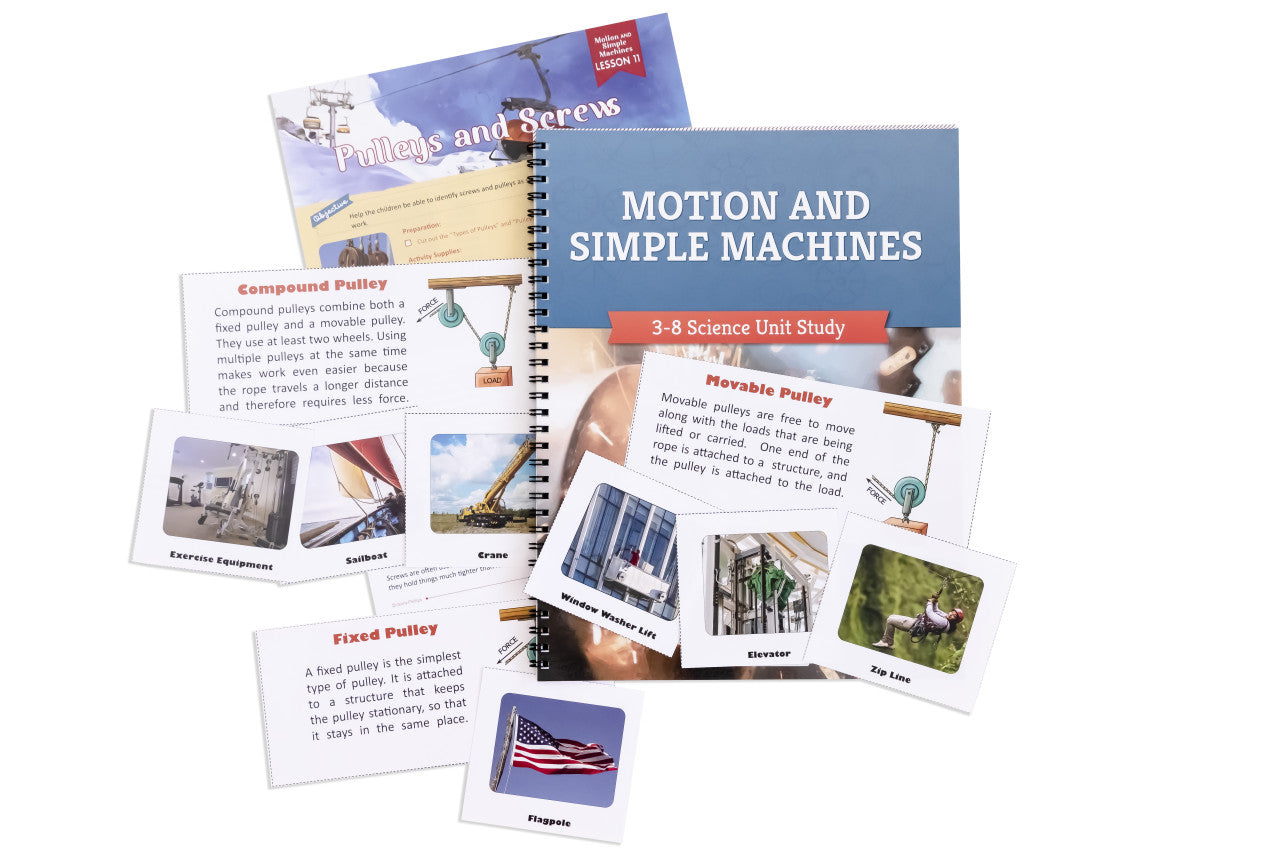
- Pulley: Fixed and movable pulley systems
- Wheel and Axle: Rotation and mechanical advantage
- Inclined Plane: Ramps and angles
- Wedge: Splitting and cutting applications
- Screw: Helical inclined planes
4. Engineering Design Process
Time: 3-4 weeks Content:
- Identifying problems and constraints
- Brainstorming and designing solutions
- Building and testing prototypes
- Evaluating and improving designs
5. Complex Machines and Applications
Time: 2-3 weeks Content:
- Combining simple machines
- Machines in technology and industry
- Future innovations and engineering
- Career connections in engineering
Hands-On Projects
Simple Machine Construction
- Build a Lever: Creating different classes of levers
- Pulley Systems: Fixed, movable, and compound pulleys
- Wheel and Axle: Cars, gears, and rotating mechanisms
- Inclined Planes: Ramps and efficiency testing
- Wedges: Cutting tools and splitting devices
- Screws: Threading and holding mechanisms
Engineering Challenges
- Machine Efficiency: Testing and improving mechanical advantage
- Design Competition: Creating the most effective simple machine
- Problem Solving: Using machines to solve specific challenges
- Innovation Project: Designing new applications for simple machines
Course Availability
- Free Resources: Available through The Good and the Beautiful website
- Physical Copies: Printed materials available for purchase
- Digital Access: Online resources and supplementary materials
- Kit Options: Simple machine construction kits and supplies
Notes
- Designed for both homeschool and classroom environments
- Emphasizes hands-on learning and practical application
- Integrates physics concepts with engineering practice
- Encourages creativity and innovation in problem-solving
- Develops both theoretical understanding and practical skills
- Adaptable to various learning styles and skill levels
- Prepares students for advanced STEM education
Links
- The Good and the Beautiful Official Website
- Science Unit Studies
- Contact publisher for current availability and detailed curriculum information
- Engineering education resources and simple machine suppliers